How are EU countries supporting farmers through the Middle East crisis?

19 November 2026

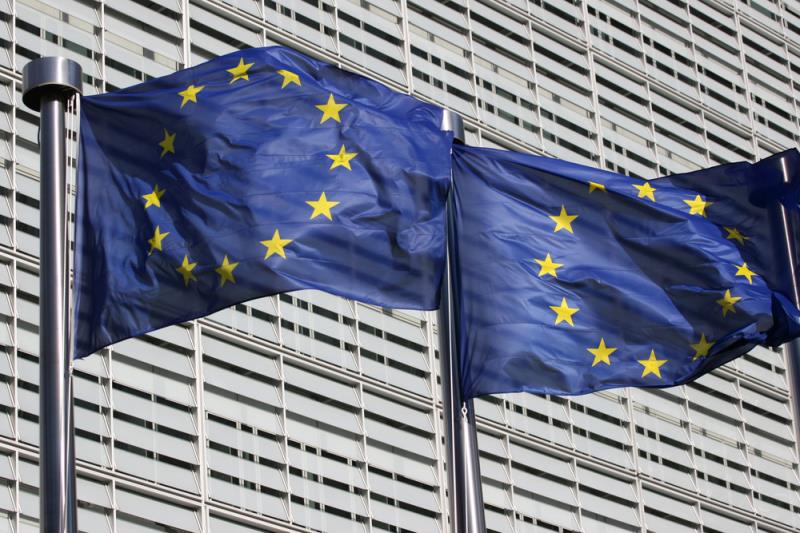
EU flags outside of EU Commission building

EU member states are using a mixture of fuel subsidies, fertiliser support, tax relief and emergency finance to help farmers manage higher input costs. However, the level and type of support available varies considerably across the EU. 

The conflict in the Middle East has contributed to higher and more volatile fuel, energy and fertiliser prices, placing additional pressure on agricultural businesses.  

In response, the European Commission introduced the Middle East Crisis Temporary State Aid Framework, known as METSAF, in April 2026. The framework allows EU Member States to use national funding to compensate businesses for additional fuel and fertiliser costs incurred between 1 March and 31 December 2026. 

What support is available under METSAF? 

METSAF allows national governments to cover up to 70% of the additional fuel and fertiliser costs caused by the crisis.  

Alternatively, Member States can use a simplified route offering up to €50,000 per beneficiary for smaller/more vulnerable businesses. This can be calculated using indicators such as farm size, land area or typical fuel consumption, rather than requiring businesses to provide detailed evidence of their actual additional costs.  

Importantly, METSAF does not provide Member States with additional EU funding. Instead, it creates the legal framework through which national governments can introduce their own support schemes.  

How have Member States used the framework? 

Spain 

  • Spain has introduced some of the EU’s largest agricultural support measures. It initially released a fertiliser scheme worth €500 million, which increased to €665 million in July, with payments of €38.33 per hectare of dryland and €92.50 per hectare of irrigated land.
  • Support for agricultural diesel was also expanded. The available budge increased from €54 million to €109 million, while the eligible period was extended until 31 December 2026 and the relevant market benchmark was modified for the calculation of the aid granted under the measure 

France 

  • France initially introduced support for non-road diesel used by farmers, alongside cash-flow measures such as deferred tax and social security payments.
  • Its METSAF budget has increased from €212 million to €424 million in October, with eligible fuel expenditure extended to cover September to December 2026. France has also co-financed fertiliser support, offering €50 per hectare of nitrogen fertiliser, rising to €70 per tonne for farmers where fertiliser represents more than 10% operating costs. 

Italy 

  • Italy has combined national tax measures with targeted regional support. Agricultural businesses were offered a 20% tax credit for fuel purchases, followed by a fertiliser tax credit covering up to 30% of eligible expenditure.
  • Under METSAF, a €20 million scheme was also approved for agricultural, fishing and aquaculture businesses in the Italian region, Friuli Venezia Giulia. Aid is available through direct grants and subsidised loans, capped at €50,000 per beneficiary. In August, the Commission approved €285 million for the agriculture, and aquaculture sectors to aid with increased fuel and fertiliser costs.  

Ireland 

  • Ireland introduced a €100 million Fuel Subsidy Support Scheme for farmers, agricultural contractors and fishers. Payments are linked to historic fuel use and are worth approximately €0.20 per litre.
  • The European Commission approved €25 million of support for agricultural businesses through METSAF. A further €2 million scheme was approved for the specialist horticulture sector. 

Sweden 

  • Sweden secured approval for a €149 million scheme covering agriculture, fisheries and aquaculture. The scheme provides support equivalent to 85% of the estimated increase in eligible fuel and nitrogen fertiliser costs, subject to the €50,000 ceiling per business.
  • Proposed agricultural payment rates from the Swedish Board of Agriculture include €12 per hectare for potatoes, €7 per hectare for sugar beet and vegetables, and €6 per hectare for cereals, oilseeds and other crops.
  • Other countries have adopted smaller or more targeted schemes. These include fertiliser support in Greece worth €41 million, fuel and fertiliser assistance worth €30 million in Portugal, €63 million in livestock support in Romania, and liquidity loans of €4.5 million for agricultural businesses in Germany.  
What other action has the EU taken? 

METSAF forms part of a wider EU response to rising agricultural input costs. 

In July, the EU agreed €540 million in emergency assistance for farmers affected by higher fertiliser and energy prices. Member States can supplement their allocation with additional funding of up to 200%, with payments required by 28 February 2027. 

The EU has also: 

  • Suspended customs duties on key nitrogen fertilisers, including ammonia and urea, for one year. 
  • Introduced more flexible rules for agricultural advance payments under CAP. 
  • Published a Fertiliser Action Plan intended to reduce import dependency and encourage more efficient fertiliser use. 
  • Proposed measures to strengthen domestic production of clean energy sectors and boost electrification.  


What does this mean for UK farmers? 

Although the UK has introduced measures such as reductions in red diesel duty and more frequent fertiliser price reporting, it has not established an equivalent national scheme specifically compensating farmers for higher fertiliser costs.  

The UK farming unions, representing farmers and growers across England, Scotland, Wales and Northern Ireland, have called for coordinated government action to help the agricultural sector manage volatile input costs and wider global instability. 

These joint asks are:  

  • Improving transparency in red diesel and fertiliser pricing, including the publication of more frequent and accessible market data. 
  • Ensuring fair market practices, supported by close monitoring of agricultural supply chains to identify risks and strengthen resilience. 
  • Strengthening the resilience of UK agriculture, recognising the essential role of domestic food production during periods of global instability. 
  • Providing clarity on future policy measures, particularly the development and implementation of the Carbon Border Adjustment Mechanism, or CBAM, and its potential impact on agricultural inputs such as fertiliser. 

Ask us a question about this page

Once you have submitted your query someone from the team will contact you. If needed, your query will then be passed to the appropriate NFU policy team.

By completing the form with your details on this page, you are agreeing to have this information sent to the British Agriculture Bureau for the purposes of contacting you regarding your enquiry. Please take time to read the BAB and NFU’s Privacy Policy if you require further information.

This site is protected by reCAPTCHA and the Google Privacy Policy and Terms of Service apply.