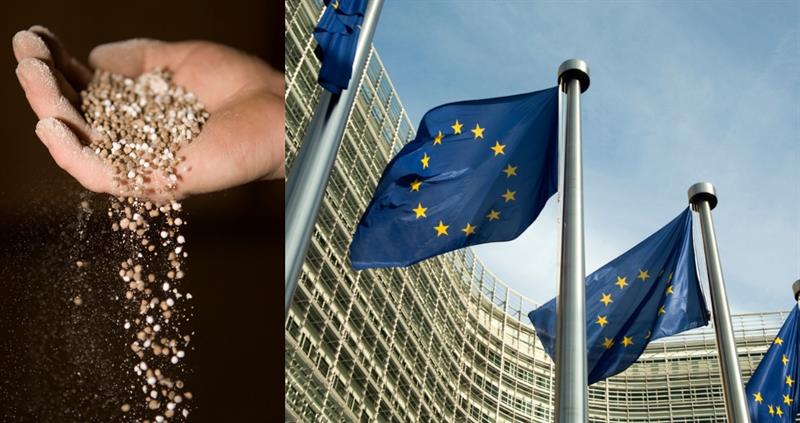
On 19 May 2026, the EU published the EU Fertiliser Action Plan – “An initiative to support farmers facing rising fertiliser costs and scarcity, reinforce domestic production and reduce Europe's dependency on imports. The Plan will directly help to ensure food security and reinforce Europe's strategic autonomy, while pursuing high climate and environmental goals.”
However, the plan was immediately met with criticism from farming organisations for both the lack of details or meaningful support. Copa Cogeca stated “Announced as a response to the severe crisis faced by farmers over the soaring cost of this key input, the plan ultimately unveiled today contains no immediate measures that would give farmers hope of economic relief for the short term with the Middle East crisis, and lacks of firm and ambitious measures in the medium and longer term to provide relief from the multiplication of EU policies artificially increasing fertilisers prices.”
The Commission is putting forward the following short-term measures:
- Commitment to providing a significant financial support package for the most-affected farmers before summer;
- Propose a targeted legislative package enabling Member States to make maximum use of support available under the current Common Agricultural Policy (CAP) Strategic plans. This package includes the creation of a new liquidity scheme to provide cashflow to farmers, more flexible advance payments, a new or adjusted eco-scheme or agri-environment-climate measure to increase fertilisation efficiency, and investment measures to support efficient fertiliser use;
- Launch an EU fertilisers value chain Partnership between fertiliser producers, farmers and the Member States to provide predictability, stability and facilitate cooperation across the value chain;
- Explore short term measures to facilitate the use of digestates within the scope of the Nitrates directive;
- Increase market transparency by creating a framework to ensure the availability of up-to-date data.
- Support biogas and biomethane projects and address funding, scale-up, permitting and transport bottlenecks, in line with the AccelerateEU communication;
- Consider proposing the activation of the internal market vigilance or emergency mode in accordance with the Internal Market Emergency and Resilience Act to prioritise fertiliser production, secure procurement, monitor supply chains;
- Consolidate and disseminate an information package for Member States on the CAP tools available to farmers to improve nutrient management, as well as on research and innovation results related to bio-based fertilisers and support farm advisory services/networks on optimal fertiliser use;
- Use the temporary state aid framework for primary agricultural producers affected by the Middle East crisis, complementing existing state aid tools;
Long-term Measures
- Diversify Supply Sources
- Develop partnerships with third countries to secure ammonia, urea, and raw material supplies.
- Support green ammonia and biomethane projects abroad through Global Gateway and Team Europe initiatives. - Build Strategic Preparedness
- Assess stockpiling systems and joint procurement options for fertilisers and inputs.
- Improve resilience against future supply shocks. - Expand Bio-Based and Recycled Fertilisers
- Promote: nutrient recycling, digestate valorisation, phosphorus and nitrogen recovery, algae biomass, microbial fertilisers.
- Integrate these into broader circular economy and bioeconomy strategies. - Promote Carbon Farming
- Link fertiliser efficiency to carbon credit systems under the Carbon Removals and Carbon Farming Regulation (CRCF).
- Potentially reward farmers financially for efficient fertiliser use and low-carbon fertilisers.